
Learning photography is often described in terms of cameras, lenses and technical settings. Aperture, shutter speed, ISO and focal length are among the first things a photographer encounters. They are important, but knowing how to change a setting does not necessarily mean knowing how to make a photograph.
At some point, photography becomes less about the equipment and more about observation.
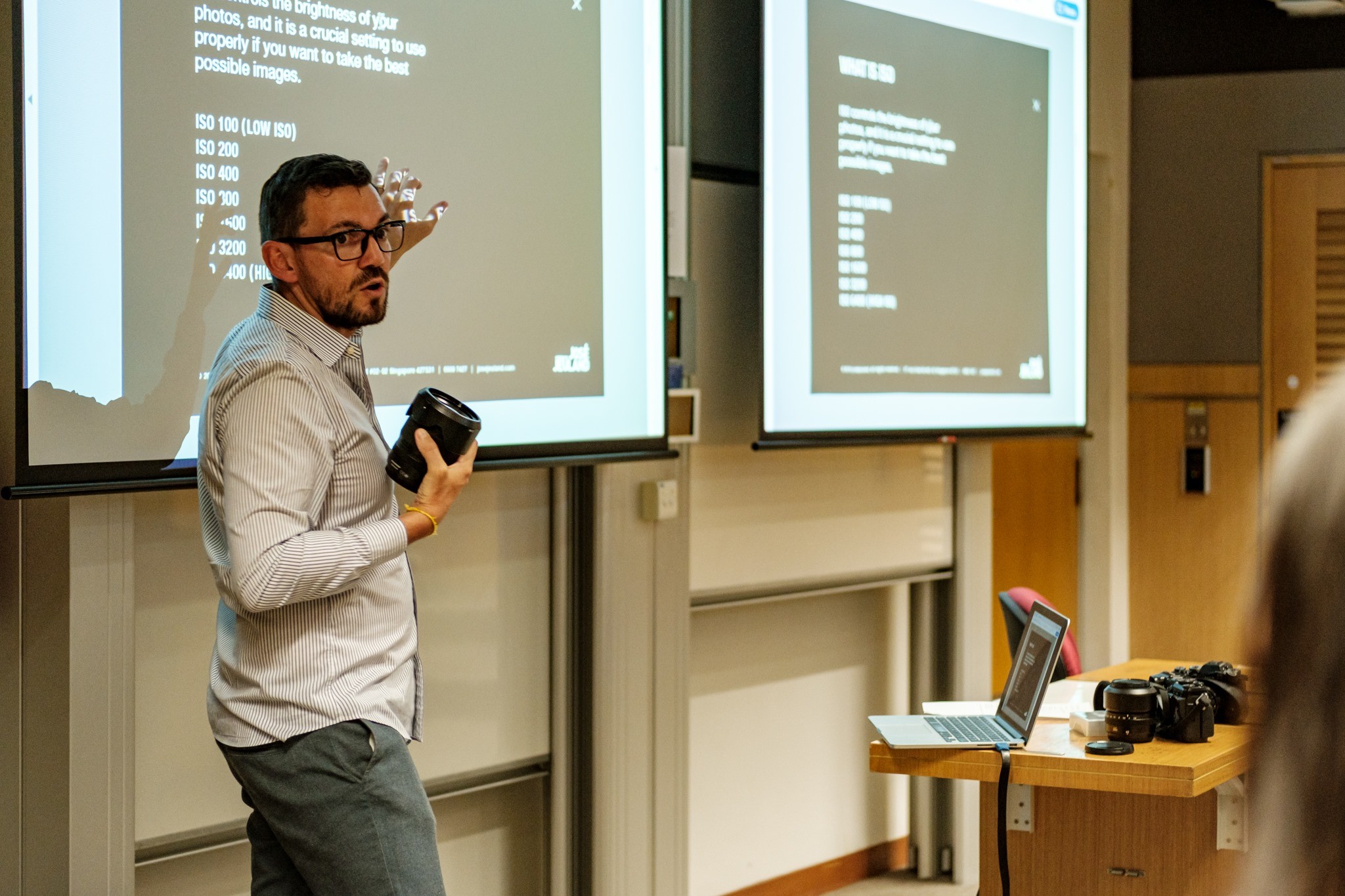
That is where a photography workshop can offer something different from simply watching tutorials or reading about camera settings. In a workshop, participants have an opportunity to photograph in real situations, make decisions as they go and understand why one image works differently from another.
For anyone considering photography workshops in Singapore, that shift—from operating a camera to developing a way of seeing—can be one of the most valuable parts of the learning process.
The Camera Is Only the Starting Point
A modern camera can handle many technical decisions automatically. It can focus, calculate exposure and produce a technically sharp image within seconds.
But the camera cannot decide what you should photograph.
It cannot tell you why one position feels more interesting than another, whether the background is distracting from the subject, or whether waiting for another moment would make the photograph stronger.
Those decisions belong to the photographer.
This is why photography education cannot be limited to understanding camera controls. Technical knowledge gives photographers more control, but observation gives them something meaningful to control.
Learning to Look Before Taking the Photograph
One of the simplest habits a photographer can develop is to pause before pressing the shutter.
Look at the light. Look at the background. Notice the relationship between objects. Watch how people move through the frame. Consider whether changing your position by a few steps could alter the photograph.
These decisions may sound obvious, but they become easier with practice.
A workshop can create an environment where participants are encouraged to slow down and look at a scene rather than immediately taking a photograph. The exercise is not necessarily about producing a perfect image every time. It is about understanding why a particular composition was chosen.
That process can gradually change the way someone approaches photography.
Composition Is More Than Following Rules
Photography is full of compositional guidelines. The rule of thirds, leading lines, symmetry, negative space and framing are all useful concepts.
But rules are tools rather than instructions that need to be followed in every photograph.
A workshop can help photographers understand what these ideas actually do within an image. A symmetrical composition might create a feeling of order, while an intentionally unbalanced frame could introduce tension or movement.
The interesting question is not simply, “Which rule should I use?”
It is, “What is the photograph trying to communicate?”
Once that question becomes part of the process, composition becomes less mechanical.
Understanding Light in Real Situations
Light is one of the most influential elements in photography, yet it can be difficult to understand from theory alone.
The same subject can look completely different under soft morning light, strong midday sunlight or artificial lighting at night.
Singapore provides a varied environment for photographers to observe these changes. Urban streets, architecture, interiors, parks and commercial spaces can all present different lighting conditions.
Rather than simply learning that one type of light is “good” and another is “bad,” photographers can learn to observe what the light is doing.
Where are the shadows falling? What happens when the subject is moved? Is the background brighter than the subject? Could the available light be used rather than corrected?
These questions encourage photographers to work with their surroundings.
Practice Makes Camera Settings Useful
Technical settings become much easier to understand when there is a practical reason for using them.
A photographer may know that a wider aperture creates a shallower depth of field, for example. But understanding when that choice helps the photograph is another matter.
The same applies to shutter speed.
A fast shutter can freeze movement, while a slower shutter can introduce motion into an image. The technical decision becomes meaningful when the photographer understands what the photograph is trying to achieve.
This is where practical exercises can be particularly useful. Instead of learning settings in isolation, participants can see how a small technical change affects the photograph in front of them.
Working With People Changes the Photograph
Photography also involves understanding people.
Whether the subject is a portrait, an event or an everyday street scene, the photographer has to pay attention to behaviour, expressions and timing.
Sometimes the strongest photograph comes from a moment that lasts only a second.
A photographer who is constantly adjusting settings or worrying about equipment may miss it.
Developing confidence with the camera can therefore free up attention for the subject. Once basic controls become more familiar, the photographer can concentrate more fully on what is happening within the frame.
Reviewing Photographs Is Part of Learning
Taking photographs is only one part of improving.
Looking back at the images can reveal things that were not obvious when the shutter was pressed. A distracting background may become apparent. A composition that seemed promising may feel too crowded. Another photograph may work unexpectedly well because of a small interaction or change in light.
Constructive feedback can make this process more useful.
Instead of simply being told whether an image is good or bad, photographers benefit from understanding why an image communicates effectively—or why it might be improved.
That kind of discussion can help develop an individual way of evaluating photographs.
Singapore Offers Plenty to Photograph
Photography does not always require an elaborate location.
Singapore’s streets, architecture, public spaces, interiors and changing urban environments provide plenty of opportunities to practise observation.
A simple walk can become a photographic exercise.
Look at reflections in glass buildings. Notice how shadows change across a street. Observe how people interact with a public space. Photograph the same subject from different distances or at different times.
These exercises can teach something that a camera manual cannot: how to recognise a photograph before taking it.
Developing a Personal Approach
Eventually, photography becomes personal.
Two people can stand in exactly the same location with identical cameras and produce completely different photographs. Their choices of framing, timing, perspective and subject will reflect how each person sees the scene.
That is one of the reasons photography education should not focus entirely on producing technically perfect images.
Technical accuracy matters, but a technically perfect photograph can still feel uninteresting if there is no thought behind it.
A workshop can provide the opportunity to experiment, make mistakes, discuss different approaches and gradually understand what kind of photographs feel natural to you.
Why a Photography Workshop Goes Beyond Camera Settings
For someone beginning to explore photography, learning the technical side of a camera is an important foundation. But it is only the beginning.
The more difficult—and arguably more interesting—part is learning to notice.
A good photograph may come from an unexpected expression, a particular quality of light, an unusual perspective or simply the decision to wait a few seconds longer before pressing the shutter.
That way of seeing develops through observation and practice.
For those exploring photography workshops in Singapore, the value of the experience therefore extends beyond learning which button to press or which setting to change. It is about spending time with the camera, looking carefully at the world around you and learning to make deliberate visual decisions.
Eventually, the goal is not to think constantly about the camera.
It is to see something worth photographing—and know why you want to photograph it.
Interested in photographing with more intention? Explore José Jeuland’s photography workshops in Singapore and learn by photographing in real situations, with guidance and feedback along the way.
Frequently Asked Questions
Are photography workshops suitable for beginners?
Yes. Many workshops welcome beginners, and learning in real situations with guidance can make camera settings much easier to understand. It helps to check the level of each workshop before booking.
Do I need a professional camera for a photography workshop?
Not necessarily. A camera that lets you adjust aperture, shutter speed and ISO is useful, but the core skills of observing light, composition and timing apply to any camera, including a phone.
What is the difference between a photography workshop and an online course?
Online courses are good for theory. A workshop lets you photograph in real conditions, make decisions on the spot and receive direct feedback on your images, which helps turn technical knowledge into a way of seeing.


